Adjustable Beds · Buying Guide
What to Check Before Choosing the Malouf M555 Smart Adjustable Bed Base
An adjustable bed base can change the character of a bedroom as much as it changes the way you rest. Before choosing the Malouf M555, look beyond the promise of smart convenience and examine the details that determine whether it will work with your mattress, room, routines, and expectations.
A considered checklist for comparing current product specifications with the practical realities of home.
Start with the specification sheet, not the product name
“Smart” is an appealing word, but it does not tell you exactly how a bed base moves, what its controls can do, or which mattresses it supports. Product names and feature sets can also vary by size, retailer, production run, or market. For the Malouf M555, treat current, model-specific documentation as the final authority. Confirm that the information you are reading refers to the exact M555 configuration you plan to buy, rather than a related model or a general description of adjustable bases.
Before comparing finishes or imagining a new evening routine, gather the essentials: available sizes, assembled dimensions, weight limits, mattress requirements, required clearance, control options, installation instructions, and warranty terms. If a specification is absent or ambiguous, ask the retailer or manufacturer to confirm it in writing. This is not needless caution; these details determine whether the base can be installed safely and used as intended.
Keep a copy of the specification sheet and any answers you receive. They make it easier to compare options and provide a useful reference during delivery, assembly, and warranty service. The goal is not to turn a bedroom purchase into an engineering project. It is to make sure that the elegant promise of adjustability survives contact with the room it has to fit.
1. Check mattress compatibility carefully
The mattress is the first major compatibility question. An adjustable base bends at articulated sections, so a mattress needs to flex appropriately without being damaged or losing its intended support. Do not assume that a mattress works simply because it fits the same nominal size as the base. Confirm compatibility for the particular mattress construction and the specific M555 model.
Ask whether the base is suitable for your mattress type, including its materials, construction, and any manufacturer restrictions. Foam, latex, hybrid, and innerspring mattresses can respond differently to repeated bending. Within each category, designs also vary: a mattress’s thickness, internal components, edge construction, and flexibility may all matter. The mattress manufacturer’s guidance is as important as the base description, especially if you want to preserve the mattress warranty.
If you are buying a mattress at the same time, evaluate the pair as a system. Check that both manufacturers permit the combination, that the mattress size matches the selected base configuration, and that the mattress’s weight is included in any relevant capacity calculation. If you already own a mattress, locate its model information and contact the manufacturer when compatibility is uncertain. A verbal “it should be fine” is less useful than an explicit confirmation for your exact model.
Also consider how the mattress behaves when elevated. A mattress that is compatible in principle may still feel different when its head or foot is raised. Test the actual combination if possible, and note whether the mattress stays in position, flexes smoothly, and remains comfortable in the angles you expect to use. If a mattress retainer or other securing component is specified, confirm that it is included and follow the installation instructions.
2. Measure the bed and the room
A smart adjustable bed base still has to fit an ordinary bedroom. Compare the M555’s current assembled dimensions with the available floor space, and measure the route from the entrance to the final position. Account for hallways, stairwells, doorways, corners, and any narrow turns on the delivery path. A base that fits beside the bed may be difficult to bring into the room if its components cannot pass through the route.
Measure the mattress as well as the base. Do not rely on a familiar label such as queen or king as a substitute for checking actual dimensions; sizing conventions and product configurations can differ. Make a simple floor plan that includes bedside tables, dressers, wardrobes, radiators, windows, and walking paths. Then consider what happens when the head or foot section moves. The base, mattress, bedding, and nearby furniture need enough space to articulate without collision or pinching.
Clearance deserves particular attention. Confirm the manufacturer’s requirements underneath and around the base, including any space needed for moving parts, power components, cables, or accessories. If you plan to place the adjustable base inside an existing bed frame, ask whether that frame is approved for the M555 and whether its interior dimensions and support structure are suitable. A platform or decorative frame should not be assumed compatible simply because the base can be set inside it.
Finally, consider the finished height. The combined height of the base, mattress, and bedding affects how easy it is to get in and out of bed and how the room feels visually. Ask what leg or height options are available for this model, if any, and verify them against the current product documentation rather than assuming they are standard.
3. Understand weight limits and support requirements
Weight limits are among the most consequential details to verify. Find the M555’s stated capacity and read its definition carefully: a manufacturer may describe a limit for the mattress and occupants together, or provide another calculation. Do not infer the meaning from a number alone. Include the weight of the mattress and bedding where the documentation requires it, and consider the combined load for two sleepers.
Capacity is not merely a question of whether a base can lift. It is a safety and durability consideration, particularly when the base is moving or holding an elevated position. If the intended load approaches the stated limit, ask the manufacturer or retailer for guidance before purchasing. Avoid treating a published maximum as a recommended everyday target unless the product documentation explicitly says so.
Check the floor and support arrangement, too. A heavy base and mattress need a stable, level surface that meets the installation instructions. Make sure the legs or support points rest securely and that the chosen bed frame is not expected to carry loads it was not designed to bear. If your home has an unusual floor surface or the base will sit on a platform, confirm the setup requirements before delivery.
4. Match the movements to your real routine
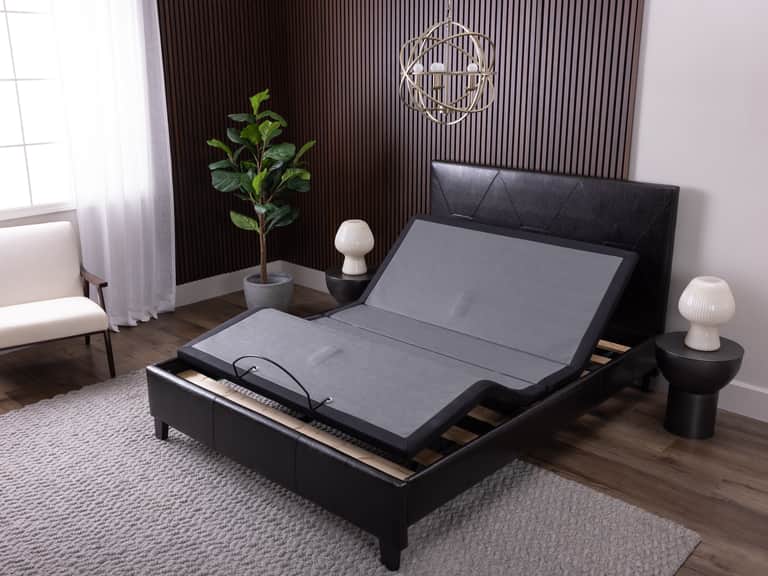
Adjustability is most useful when it suits the way you actually spend time in bed. Write down the positions you expect to use: a modest head lift for reading, a raised foot section for lounging, or a flat position for sleep. Then compare those needs with the movements confirmed for the M555. Verify whether head and foot sections move independently, together, or through preset positions; do not assume any particular articulation or range of motion without checking the model’s current specifications.
Think about how often you will make adjustments. Someone who changes position several times each evening may care more about intuitive controls than a long menu of rarely used settings. A person who prefers one familiar angle may value a reliable memory function, if the model includes one. Read the control description closely and establish whether the base is operated by a handheld remote, an app, or another method. Confirm which options are included, whether any require a separate purchase, and what happens if a phone is unavailable or the wireless connection is interrupted.
“Smart” features can mean different things across products. Look for exact details about connectivity, supported devices, setup requirements, and app availability. Check whether the controls need a home network or account, whether software support is described, and how the bed operates during a power interruption. If you prefer not to rely on a phone, verify that a suitable alternative control is included and that it provides the adjustments you need.
Make a short feature list and rank it honestly. Put essential movements and controls first; treat lighting, charging ports, massage functions, or other conveniences as bonuses unless they are confirmed and genuinely useful to you. A thoughtful choice is not the base with the longest feature list. It is the base whose confirmed functions fit your habits without adding complexity you do not want.
5. Consider shared sleep and split configurations
For couples, the central question is whether both people want the same position. A single configuration may move both sides together, while a split setup can allow more independent adjustment; availability and behavior depend on the model and size. Confirm whether the M555 is offered in a configuration that suits your needs, what components are required, and whether controls and mattress arrangements are compatible with that setup.
Split arrangements can bring additional practical considerations. Check the dimensions of each section, the mattress requirements, any connection or synchronization method, and whether the two sides can be operated independently. Consider the visual line where the mattresses meet, the bedding required, and whether the final setup will leave enough room for bedside furniture. If you share a bed, test how changes on one side feel from the other side whenever a showroom demonstration is available.
Do not assume that a size name guarantees a particular configuration. Ask for the exact component list and dimensions for the version you intend to order. If the M555’s current product information does not clearly address your preferred arrangement, get confirmation before purchase.
6. Review delivery, assembly, and everyday access
Installation can shape the experience as much as operation. Read the setup instructions before ordering and determine whether the base arrives assembled, in sections, or requires substantial assembly. Confirm the delivery service, whether placement in the bedroom is included, and what tools or additional help may be needed. These details can vary by retailer and location, so distinguish the product’s requirements from the seller’s delivery terms.
Plan access to power according to the manufacturer’s instructions. Check where the cord exits, where the outlet is, and whether the cable can remain safely positioned throughout the base’s movement. Avoid stretching, trapping, or routing cords where they could be caught by moving sections. If the base includes electronics or accessories, make sure the room layout leaves them accessible for setup and service.
Once installed, follow the manual for initial testing. Keep hands, bedding, pets, and loose objects clear of moving parts while the base is operating. Learn the controls before settling in for the night, and identify any safety or lock features described in the documentation. Store the manual, order details, and warranty information somewhere easy to find.
7. Read the warranty as part of the decision
A warranty is not a decorative footnote. Review its duration, covered components, exclusions, and claim process for the specific M555 version and seller. Confirm who handles service, what proof of purchase is required, and whether the terms distinguish between the motor, electronics, frame, or other parts. Do not presume that the mattress and base share a warranty; they are separate products and may have separate conditions.
Check whether using a particular mattress, bed frame, or installation method affects coverage. A setup that conflicts with the manufacturer’s instructions could create avoidable complications later. Save receipts, product labels, serial information, and written compatibility confirmations. If the base requires registration, note the deadline and complete the process according to the stated instructions.
It is also worth understanding the return policy before purchase. Adjustable bases can be bulky to move, and retailer policies may address delivery, restocking, pickup, or return costs differently. Read the terms rather than relying on assumptions about standard practice.
A practical pre-purchase checklist
Before committing to the Malouf M555, use this compact list to turn research into a clear decision:
- Confirm that the specification sheet is current and specifically identifies the M555 configuration you intend to buy.
- Verify mattress compatibility with both the base manufacturer and, when needed, the mattress manufacturer.
- Measure the base, mattress, bedroom, delivery route, and clearance around nearby furniture.
- Confirm the meaning of the stated weight limit and compare it with the full intended load.
- Check which positions, controls, connectivity options, and presets are actually included.
- Confirm available sizes and split configurations, including any extra components or setup requirements.
- Review installation, power access, delivery, warranty, and return terms before ordering.
- Keep written answers to any questions that were not clearly addressed in the published materials.
How to compare alternatives without losing the plot
If your checklist reveals a mismatch, compare other adjustable beds against the same criteria rather than starting over with a list of fashionable features. For example, the The Clean Bedroom Level 3 Adjustable Bed Base is another adjustable-base option with published information describing independent head and foot lifts, head tilt, and several control features. Those details may help illustrate the kinds of questions worth asking, but they do not establish that it is a substitute for the M555 or compatible with your mattress. Confirm all specifications, sizes, and terms for any alternative directly before making a decision.
A useful comparison table can be simple: mattress compatibility, dimensions, capacity, movement options, controls, installation, warranty, and total cost. Give each item a “confirmed,” “unclear,” or “not suitable” status. The “unclear” column is valuable: it shows exactly where one more question could prevent a costly assumption.
For a broader grounding in how adjustable beds and bedding interact, explore our guides to bedding, pillows, and latex. Materials and accessories affect comfort, but compatibility should still be checked for the specific mattress and base combination.
The final decision: clarity is the luxury
The Malouf M555 may appeal to shoppers looking for a smart adjustable bed base, but a confident decision depends on details rather than the name alone. The right match should suit the mattress, fit the room, support the intended load, and offer controls that feel natural in everyday use. Its setup and warranty should also make sense for your household.
Take time to check current product information, ask direct questions, and measure twice. If the answers align, you can choose with a clearer picture of what the base will do and how it will live in your space. If key information remains uncertain, pause until it is resolved. In the intimate architecture of a bedroom, the most considered purchase is the one that feels effortless because the practical work was done first.